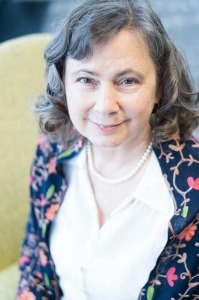
Wednesday, November 6, 2019


I am thrilled to announce that my book 
Heart on the Page: A Portable Writing Workshop is now available from me and will be available on Amazon for the official book launch in February 2020.

Launch party will take place on Feb 18th @ 7:00 pm 
at Pathways: A Healing Center
3115 Hennepin Ave Mpls

I will read a selection from the book, followed by Q & A, and book signing. 
Light refreshments will be served

 to pre-order: wendybrownbaez.com

Heart on the Page: A Portable Writing Workshop is an inspirational guide for both individual writers and writing instructors who teach in institutions, non-profit organizations, and healing centers. It begins with Wendy Brown-Baez’s own search for healing and interweaves stories of her workshop experiences with practical advice on how to inspire writers who may not think of themselves as writers but have a story to tell. Specific poems and prompts used to access intuitive guidance are interwoven with suggestions on how to engage participants with physical or emotional health challenges. Writing and sharing stories activates the ability to find meaning after trauma, loss, or transition. The book is a valuable resource for staff or volunteers who wish to incorporate therapeutic writing for healing, self-awareness and creative expression with clients and for their own self-care.   


EXCERPT FROM HEART ON THE PAGE: A PORTABLE WRITING WORKSHOP by Wendy Brown-Baez 

Writing for Healing
My healing story begins not with my own healing but with seeking solutions for my companion’s depression. Michael’s periods of depression seemed endless as he responded negatively to every circumstance. 

With a diagnosis of bi-polar disorder, the puzzle pieces fell into place, but he hated the way medication made him feel. We lived in Santa Fe, New Mexico, a Mecca for alternative healing, and I began to search for alternatives to prescription drugs. Earthwalks for Health was part of that search. Earthwalks connected us to indigenous artists and local sages to learn about their traditional spirituality and healing practices. This is how I met Joan Logghe, beloved Santa Fe poet. Joan was the founder of Write Action, a writing support group for people who were HIV positive. As time went on, they either died or became so well, they no longer had the time or inclination to attend, so she opened it up to anyone with a physical or mental health challenge. 

Joan had worked with Natalie Goldberg and used the same basic writing instruction that so many writing instructors and writing groups would come to rely on: spontaneous timed writing. Pick a time, put pen to the paper and keep it moving, not stopping to consider grammar or sentence structure or even if it makes sense. 

Joan used poems as prompts. In this way, we entered the rhythm of language. The poetic associations and images we read inspired our own words. From her, I learned that by sharing my own work, I create a sense of intimacy and inspire confidence in others to share. I consider her a friend and a mentor, someone who showed by her example how to lead writing for healing and how to create a safe, welcoming space.

Eventually Michael became more and more mentally unstable and one night he gathered up the courage to end his mental torment by killing himself. I wept until my eyes were swollen shut but I was released from care giving and uplifted by a burst of creative energy. To be able to pour out my grieving heart onto the page in the writing groups was cathartic. To know that others were willing to be on the journey, accompanying me through the muck, was lifesaving. From that point on, writing became not only a way of self-expression but a life raft that saved me from drowning. When emotions feel overwhelming, writing helps me to stay focused. Writing helps me to analyze and understand what I am feeling and to make a shift from emotion to clarity.

Ten years later, I received the Minnesota State Arts Board Artist Initiative grant. Pathways was one of my targeted organizations. I led workshops specifically for caregivers to have a break, for self-care. Every other Thursday afternoon became my niche from that time on. 

Pathways: A Healing Center offers free mind-body-spirit workshops for clients and their families. The class I offered at Pathways was called Care for the Caregiver. Participants came and went in this writing group, depending on a conflict when other services are offered, energy levels, or the ability to have someone take over their duties. Often the participants had their own health challenges. Word of mouth spread about the benefits of the group and in 2016, I changed the name to Writing for Healing. Since then, at each session we have a group of 6-10 people. 


Writing opens our hearts so that we can be authentic. Many caregivers and those with health challenges are angry, frustrated, frightened, grieving, and exhausted. Caregivers succumb to being completely available, both emotionally and physically, to the demands of care giving, and feel they must keep up a strong, cheerful, optimistic façade.

In our writing group, we can let down the façade and explore what we yearn for, what our passions are, and what give us solace and spiritual nourishment. We can plan for the future and coach ourselves through fear and grief by being present and reminding ourselves to focus on the present. We remind ourselves of the many gifts we have and the support system of family, friends, and organizations such as Pathways. We write about making choices based on knowing ourselves and accepting our limitations and honoring our vision of what can be. We realize we walk a path of compassion with strength, courage, and wisdom. We learn that others have also walked this path and we have a sense of commonality and community. Our inner resilience becomes more certain and we acknowledge blessings along the way.

TYPICAL WRITING PROMPTS FOR CAREGIVERS
I don’t have to be perfect, I just have to—
List all the things you do for yourself, from the smallest thing such as a bubble bath to taking yoga, walking, or calling a friend: how do you raise your vibration?
What brings you joy?
What gives you bliss?
What do you yearn for?
How do you have fun?
What do you do for pleasure?
I promise myself—
What my tears tell me

POEM: Kindness by Naomi Shihab Nye
PROMPT: what I left behind and what I was able to keep—

POEM: Antilamentation by Dorianne Laux
PROMPTS: what I regret and what I don’t regret
what you gave me—

POEM: Permission Granted by David Allen Sullivan
PROMPT: I give myself permission to—

POEM: The Tao of Touch by Marge Piercy
PROMPT: what nourishes me

© 2019 Wendy Brown-Baez


Wendy is available to present writing workshops for your support group, staff development meetings, writers group, and book club. She trains staff, volunteers, and writing instructors to practice therapeutic writing for clients and for self-care. www.wendybrownbaez.com


Sunday, August 25, 2019


Perspectives

Wednesday at 10 AM Pacific

August 28th 2019:Healing Yourself Through Writing
Are you in need of healing from past hurt? Trauma? Physical challenges? Or perhaps there is an inner critic in you that holds you back from writing? Healing is a process says author and poet Wendy Baez and we can encourage it through simple writing techniques. Join Dr. Vidisha Patel as she engages in conversation with Wendy to discover how we can all learn to heal ourselves and overcome any inner critic through writing.
Share EmailSHARE
Download PDFDOWNLOAD PDF
Get CodeGET CODE

Tune in

Wednesday at 10 AM Pacific Time on VoiceAmerica Health and Wellness Channel
LISTEN LIVE
EPISODE ON DEMAND
VIEW HOST PAGE
Questions? Comments?
Call In Live! 
Toll Free: 1-866-472-5792
Intl: 001-480-553-5759

Featured Guest

Guest Image

Wendy Brown-Baez

Wendy Brown-Báez is the creator of Writing Circles for Healing. Wendy is the author of the novel "Catch a Dream," poetry books "Ceremonies of the Spirit," and "Transparencies of Light" and her poetry and prose appear widely in literary journals and anthologies, such as Mizna, Wising Up Press, The Feminine Collective, Poets & Writers, Talking Writing, Water~Stone Review, Peregrine and Tiferet. Wendy was awarded McKnight and MN State Arts Board grants to teach creative writing in non-profits. She continues to facilitate creative writing and memoir groups in community spaces such as healing centers, schools, libraries, cafes, prisons, churches, women’s retreats, yoga studios and arts organizati
Read more

Share This Episode

facebookShare On Facebook
twitterShare On Twitter
LinkedinShare On LinkedIn

Tune in to hear more about my writing practice, tips on how to care for yourself when writing about difficult topics, and about the power of writing for healing. Tis show airs August 28 at 10:00 am Pacific time

Monday, February 18, 2019

Chicken Soup for Grief


All she could imagine cooking was chicken soup. She wasn’t even sure she could eat the soup but at least she could nourish someone else. She had made matzoh ball soup every winter for years, she used noodles to make a more traditional chicken soup, she taught herself to make mole from chicken stock adding the mole paste from the jar of Maria’s. (Why roast chilis and mash up sesame seeds when Maria’s was good enough? she reasoned.) These days she mostly ate pudding and cookies and yogurt, soft sweet foods, erasing years of determination to serve healthy choices: fresh sautéed vegetables and salads, lamb or fish, only olive oil, nothing with sugar. How he craved sugar! She remembered how he would add sugar to a raw beaten egg and pretend it was dessert. He loved her cooking, said he could tell she cooked with love. It was love: she put up with the cigarettes, the excursions to other states without notifying her first, the flat tires because he insisted in driving over the cactus-laded hillsides instead of the main road, the strangers brought home from the bar at 3 am, the frantic calls to her during work. (The questionnaire at the doctor’s office:  Are you able to take vacations without him? and how when she answered yes, the assistant was surprised, raised his eyebrows. As if she had done something wrong. Gave the wrong answer.  That was when she knew, that was the moment. It wasn’t just moods, it wasn’t just something to be cured with hot soup and salads or even acupuncture and therapy. It was terrible. Those lines of neurons laid down in childhood, those genetic misfirings, those attempts at self-medication, it was all part of a pattern no one seemed able to break.)   She had gone to retreat, recuperate, take a breath, because of his insane hours, because of his insistence that he didn’t want to live, because of the gun he had hidden from her, because of the suicide notes he read to her to ask her opinion, (how do you write the right thing when you are going to break someone’s heart into pieces and what right did he had to do that to us? she fumed) because their couple counseling broke down the day he drank too much and she was too angry to stay. That morning when his soul had left his body, there had been a black crow feather on the doorstep. She picked it up. She knew it was a sign but she didn’t—couldn’t—she was on her way to therapy, to the rest of her life, to her life savers of groups and activities. His body was already cold but she wouldn’t find out until that evening. And now she came to visit carrying a whole chicken, carrots, celery, an onion, a box of noodles. She would make soup. Nothing would stop her. Not the fact that the temperature was in the 90’s and soup was comfort for a winter’s day. Notice the way she carried all the ingredients in a bag she could hardly lift, more than enough to make two pots of soup. She brought her grief and her release, her freedom, her love unstitched from the place where she had been woven into a tapestry of despair and fear, of hopelessness. He told her I don’t want to be here and he meant it. But she wanted to. She wanted to soar, to sing, to commune, to praise, to bless, to be blessed, to love, to be connected, to be whole.


Wednesday, December 26, 2018

Writing in Community: writing practice, writing rewards


I am a writer who chose to dive into life rather than attend college. I left my home on the East Coast to live in Santa Fe, New Mexico. My story after that decision is filled with an alternative lifestyle, travel, kids, multiple losses, moving again and again, surviving a partner's suicide, re-claiming my voice, becoming a performance poet, my youngest son's suicide, moving to Mexico and co-founding an art gallery, providing child-care for grandsons. And finally creating a writer's life. My work appears in over 40 literary journals, anthologies, and magazines, many of which you never heard of, and I have published a novel, a full length poetry collection and two chapbooks.


I always wanted to facilitate writing groups but it was after the loss of my son that I realized I had hard-earned wisdom as well as a desire to be of service. I created Writing Circles for Healing as a way to deepen my own healing. 


By receiving McKnight Community Art Program grants in 2008 and 2009, I was able to bring a performance-writing workshop to one high school and a writing-art installation project to another. One high school hired me as the after-school writing instructor.  I volunteered to facilitate writing workshops at non-profits: victims of domestic violence and clients who were HIV+. In 2012 a grant from the Minnesota State Arts Board gave me the opportunity to teach in twelve non-profit human service and arts organizations, from a heart patient support group to Saint Paul Almanac. I connected with Mn Prison Writing Workshop. I continued to teach in community education programs and was an artist in residence through Patrick's Cabaret for The Aliveness Project, a resource center for those who are HIV positive.

This lengthy explanation is to provide a bit of background to what I do now: facilitate writing workshops in cafes, churches, women’s retreats, libraries, prisons, healing centers, yoga studios, bookstores, and community centers. I teach mostly memoir, personal essay or creative non-fiction, and poetry.

I love what I do. Sometimes tears indicate that someone has found her/his voice. Always there is laughter. Someone may have a break-through or transformation during class. A young woman who had never written before started writing daily. Participants type up poems for the first time since school days. People give feedback that they have started writing again or re-discovered writing. I was gratified to hear the resiliency expressed by participants at The Aliveness Project. The participants who attended my workshop continued on to performance workshops. Later, these participants got up to share their work in front of over a hundred people.

At Pathways Healing Center, a man’s brain tumor had returned after three years of remission; he attended my class before he passed away. At that point the tumor was impacting his ability to be coherent and so he copied the last lines of a poem I used as a jumpstart. That day it just happened to be a poem I wrote and I will never forget the chills I got as he read my words back to me. One participant wrote in columns—first his words marched down the right side, then his words marched down the left. To tell you the truth, I didn’t always understand what he was writing about but others in the circle complimented his “poetic style”. A woman whose husband was dying from ASL came for a break from care-giving. One woman had to sit on the floor because it was too painful to sit in a chair. Several people grieved spouses or parents. Cancer survivors wrote about feeling they are a burden on others. 

We used prompts such as: what I am praying for, my beloved body, the knot of the self that won’t untangle, and what brings me joy. Here’s a quote from someone who went through a nasty divorce, then breast cancer: “Be what you need and want to receive, even though you don't have it yet.” Often I am in awe of their resiliency as it finds expression on the page.

The thing is, I believe we all have stories to tell and some of us have important stories. Some of us are the story-bearers for those who can't quite yet tell their stories. I have heard stories of abuse, grief, fear, regret, addiction, depression, and shame. I have heard stories of the will to survive. I have heard stories of unremitting guilt and stories of enduring love. My goal, I tell my students, is to get you writing so that when this class ends, you are motivated to continue. 

"Writing is a practice. The more you practice, the more you will find your voice and the story you are compelled to tell."


I have dreams and visions for me, the writer. But there is a satisfaction in teaching that keeps me on the look-out for poems to use as jumpstarts, articles about craft, and ways to encourage those determined to share the story they have inside.


Saturday, December 8, 2018

Writing to Heal Loss and Grief: possibilities

Writing has been a way for me to process and heal from loss and grief, betrayal and re-claiming my identity, dislocation and a yearning to belong. I write to articulate what is deepest within, what haunts me and won't let go, and what I am troubled by. That might range from the latest images of garbage floating in the ocean to the sidewalk shrine to mark where a teen-aged girl had been shot. It occurred ten years ago and it still comes up when I write.

Today I ruminate on the passing of both of my parents. I was able to be with my mother so she could die at home. Because of my father's psychological disorder, he was unable to stay home. He was moved to a residential care facility and once he heard the news of my mother's death, stopped eating. The facility took him to the hospital; from there he went into hospice's inpatient unit. Six weeks from my mother's death, he passed away.

These are not easy topics to write about. As I share the words here, I am reminded that I am skimming the surface, presenting the facts. My feelings are many layered and still changing. The relief that I no longer have to worry about something happening to my aging parents while I am not there is replaced by regret that their final years were difficult and I didn't visit more often. Yet, they were able to stay in their home where they had lived for 60 years; they had a comfortable lifestyle, enjoyed visits from my siblings and me; my mom was able to get out to restaurants, shopping, and Longwood Gardens and loved to read.

I want to write about the last weeks of my mother's life. I hope I can capture her grace, sense of humor and acceptance, as well as her disorientation from pain medication. I hope I can write about her disappointment and anger when she learned that I couldn't help her up and down the stairs. My mom hated being confined to her bedroom but we had no longer had a choice.

I want to imagine the last days of my father's life. He wanted to come home; he was upset that he couldn't; if he had been in his right mind, he might have understood why. I have to process that this was not the choice I wanted to make for him and yet there was no way I could deal with his erratic behavior and demanding paranoia.

Writing is like letting down the nets and see what you catch. Like opening your heart and reading a message written in your blood. Like stirring the pot so all the ingredients blend into something nourishing. Like pulling off a band-aid to see if the wound needs more antiseptic. Like a magic mirror that tells the truth. Like a warm hug that comforts you when you discover your heartbreak is just the human condition. Like a reminder that no matter what has happened to us or around us, we are a work in progress and at the same time, eternal and whole just the way we are.

I hope I get to have this journey soon, after the gifts are given, the volunteer roster settled, the anthology edited and ready for the printer, the next meeting, the next discussion, the next submission. For my new year intention, I am claiming time to delve deeper into my family story than ever before. The reasons I ran and kept running. The reasons I stayed in touch. The reasons I went home to be by my mom's side. The reasons I craft feelings into words.


Friday, November 23, 2018

Quieting the Left Brain Critic


When I facilitate writing workshops, I use poetry as a way to enter the intuitive mind. I believe poetry opens the door to the subconscious. The difference between the left brain and the right brain is that the left brain tends to put things in order, to make sense of things, and the right brain makes leaps of associations, what is similar and what is different, according to the senses. In this way, right brain thinking can be more visual, visceral, emotional, and imaginative. It doesn't care if things fit together, it cares that there is a pattern, symmetry, memory and new connections. 

Our left brain is also where our inner critic lives and pokes at us when we are being creative, telling us we are not doing it right, we aren't good enough and we don't deserve to play.
By putting the pen to paper and keeping it moving without listening to the voice saying we aren't choosing the perfect word or right word, we dive beneath the surface. 

The benefits of using poetry as a jump start for writing:

Poetry provides a cultural context and expressive model that supports openness and emotional honesty.
It connects us to our intuitive imagination.
Reading and writing poetry is a natural process for people in pain.
Poetry provides a private experience where an individual can control the outcome.
Writing poetry is joyful and self-affirming even if the topic is painful.
It is a skill that we can continue to access.
It is a way of connecting with others through reading and publishing.
(excerpted from Writing with At-Risk Youth: the PONGO Teen Writing Method) 

Here is a poem and promt I use often in my workshops. The poem has humor and also the specific details: the red dress, the onion rings, the carnival ride. We read the poem and then I suggest the prompt. We don't analyze the poem as it returns us to the left brain. Sometimes the images in the poem trigger our own memories and sometimes they are a catalyst to give ourselves permission to write what we have not dared to speak, or even think.  


 Regret nothing. Not the cruel novels you read
to the end just to find out who killed the cook, not
the insipid movies that made you cry in the dark,
in spite of your intelligence, your sophistication, not
the lover you left quivering in a hotel parking lot,
the one you beat to the punch line, the door or the one
who left you in your red dress and shoes, the ones
that crimped your toes, don't regret those.


Prompt: what I regret and what I don't regret


Thursday, November 22, 2018

Art and Healing: writing as a tool for coping


My healing story begins not with my own healing but with seeking solutions for my companion’s depression. Michael’s periods of depression seemed endless as he responded negatively to every circumstance, whether it was a sunny day of good food, friends, and things to do or a gloomy day of disappointment and things gone wrong. Sometimes he was unable to get out of bed for days at a time. I insisted that he see a doctor. With a diagnosis of bi-polar disorder, the puzzle pieces fell into place. Unfortunately, he hated the way the pharmaceuticals made him feel. 

We lived in Santa Fe, New Mexico, a Mecca for alternative healing, and I began to search for alternatives to prescription drugs. He was willing to try anything, from talk therapy and art therapy to drama class, from acupuncture to homeopathic medicine, from writing class to drumming circles, from anti-depressants to a Mexican limpía, from volunteering at a senior center to Recovery, Inc support group, from Chi Jong to hiking. 

I eventually came to understand that one has to want healing, sometimes with all of one’s strength and focus. It isn’t how much you do or what you do, but the drive to be well has to supersede and overcome the habitual patterns of being sick. A new identity must be created and cultivated, painstakingly and continuously.


Earthwalks for Health was part of my search for ways to heal. Earthwalks connected us to indigenous artists and local sages for a week-end of learning about their traditional spirituality and healing practices. This is how I met Joan Logghe, beloved Santa Fe poet.

It was energizing to hear common themes go around the circle...


Joan was the founder of Write Action, a writing support group for people who were HIV positive. As time went on, they either died or became so well, they no longer had the time or inclination to attend, so she opened it up to anyone with a physical or mental challenge. I was writing poetry with another group at the time and encouraged Michael to attend Joan’s group. He found it satisfying to pour out his brutally honest thoughts on paper and not be judged. One week, he couldn’t attend because he was going out of town so I suggested that I could go and “keep his seat warm.” I loved it and we continued attending together weekly. We both felt we had a home where we were supported and accepted. It was energizing to hear common themes go around the circle and to be reassured that coping with Michael’s moods was not isolating us. 

Joan used the same basic writing instruction that so many writing instructors and writing groups would come to rely on: spontaneous timed writing. Pick a time, put pen to the paper and keep it moving, not stopping to consider grammar or sentence structure of even if it makes sense. Natalie also writes in Writing Down the Bones, Freeing the Writer Within, “go for the jugular. If something comes up in your writing that is scary or naked, dive right into it. It probably has lots of energy.”


Joan used poems as prompts. In this way, we entered the rhythm of language and I appreciated the exposure to poets unfamiliar to me. She was compassionate and humorous, non-critical and non-judgmental, and was willing to share her own beautiful honest and vulnerable writing, even if it felt “uncooked.” 

As time went on, Michael became more and more mentally unstable. He would rearrange furniture at 2 am; had a serious car accident; started to have panic attacks and bouts of rage for no reason; and either would not answer the phone or talk compulsively for hours. I became more of a care-giver than a companion, lover or mate. I kept the house, buying groceries, cooking and cleaning, but I also opened the mail that he would leave unattended, planned our trips out of town, stayed connected with friends, made sure he kept his appointments, and listened to him talk about himself, his problems, his painful childhood, his lack of inner resources to find work or stay at a job, his lack of self-confidence and motivation, for hours and hours. He no longer wanted to be here, he told me.

“Please let me go, give me permission,” he begged. I can’t believe I am still alive.” 

I was exhausted, frustrated and overwhelmed, working part time at a retail shop, trying to develop my writing skills, stay connected to my almost-adult sons and my friends, and pursue my own interests. And I also had emotional wounds to heal. Once I recognized that I needed to create boundaries, I reached out and was able to receive counseling at Southwest College.

Michael’s mental state continued to deteriorate and he became more and more determined to end his suffering. We discussed suicide often and my attempts to talk him out of it ranged from “we don’t know what’s on the other side” to “What about your sons?” When he confessed that he has kept a gun secretly hidden for two years, I was frightened. Events spiraled until I moved to our friend’s rental and then house-sat for her while she was out of town. Michael and I continued to see each other but I would ask him to leave so I could work. Eventually he planned what he had been obsessing about for years and I came home one evening to the news that he had killed himself.

To be able to pour out my grieving heart onto the page
                                                          was cathartic.

After days of weeping and memorials and his family’s recriminations and time to reflect, I returned to the writing group. A burst of creative energy was released because I was no longer care-giving. To be able to pour out my grieving heart onto the page was cathartic. I felt both liberated and abandoned by Michael’s death. He was no longer holding me back but I also no longer had his adventurous spirit, his companionship, his affection and playfulness when he wasn’t depressed. I was angry at myself,  that I had put up with his abuse, recalling those times when he was critical or demanding of me and other times  when he risked our safety while driving or traveling. A cauldron of boiling emotions poured out onto the page. To know that others were willing to be on the journey, accompanying me through the muck, was life-saving.